

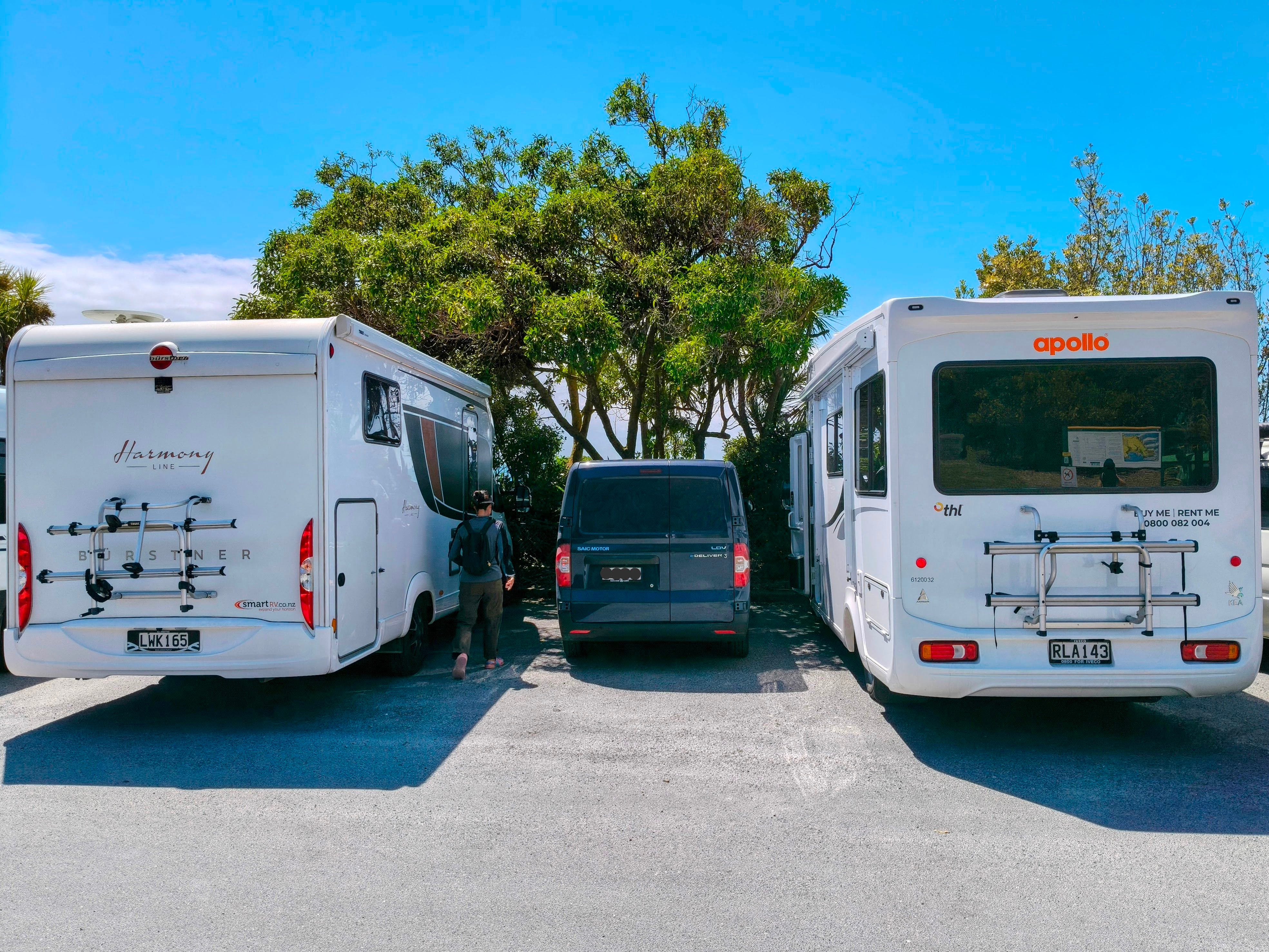
I finished up an all-consuming, but rewarding job for Hollywood in mid-May and immediately set about converting my LDV eDeliver3 electric van into something fun and liveable.
In January, I bought a near-perfect sized pull-out slat bed from Facebook Marketplace. It came with mattresses, but I didn’t find them comfy and didn’t like the covers. Fortunately, the seller threw in a used, but firm and sturdy, Dunlop mattress, which I hacked up and glued into the shapes required for this sofa bed. My Mum then spent at least two whole days at the sewing machine, stitching together fitted covers for them in the day-brightening orange, purple and “petrol” colours you see here. Cheers Mum.


The only downside with the bed is its length vs my length and the incompatibility of these numbers. Using a pallet and a piece of framing timber from the movie I worked on, a piece of vitex1 decking from my bro-in-law, some swamp kauri offcuts from Te Tai Tokerau and a couple of pieces of dressed timber from Bundo’s, I fashioned a small bench to fit in the gap and give my feet somewhere to rest of an evening. Or head, if we sleep that way round. It’s finished in a shiny polyurethane, also recycled from the film industry.
I had to buy the dressed timber because I needed very specific sizes for the main beams, since it was designed to house the van’s “leisure battery” underneath. After construction, I’m pleased to say the 1024wh battery slotted in perfectly, all plugs are accessible and its info screen is visible below the top of the bench. Phew!


Across the way from the sofa/slat bed sits my piece de resistance: the cupboard. Yep, a plywood cupboard, held together by unsightly-but-functional butt joints is the van’s main feature and part I am most proud of. I’ve never made anything above flatpack furniture before, so this was a daunting prospect. However, with the help of my expert furniture designer Dad on the track and jigsaws, we cut the plywood pieces out over a day. Then, section by section, I started bonding them together with glue and screws. Credit to my niece Florence and my brother Matt for the parts they also played.


The end result is a sturdy 12mm, Osmo-oil coated ply cupboard - yes, some of the ply is Hollywood-hand-me-downs - that sits over the left wheel arch. I wanted the cupboard to have natural rope handles, but couldn’t find to purchase in a small enough quantity, so I wove my own from string.


Inside its two catched doors, I can fit all the cooking gear, Trangia, fuel, electric heater and a bunch of other knick-knacks. Up top left, is a set of cubby holes, with recycled tent pole elastic to hold items inside. All the shelves are finished with that EVA non-slip matting, to stop any crazy movement.
The cupboard, the bed and the bed extension are all fixed to the floor with steel turnbuckles, so they don’t slide around under that roller coaster-style EV acceleration. The cupboard is also strapped to the van sidewall and has super-strength double sided tape along the back edges, to help keep it firmly in its place. The test for this fixing will come in the hot, summer months! Nothing has been drilled or fixed permanently into the van, so it can all be completely removed in approximately 30 minutes, or put back in under an hour. This, I understand makes it a “Removable Build” - or some might argue a “No Build”, even if I did bloody build stuff.
Insulation-wise, I’ve tried to keep it to a minimum and avoid sticking things all over the inside of the van. It’s an adventure wagon and not for the fulltime van life, so warm blankets and the small 600w heater should hold us warm enough. So far, I’ve covered the left wheel arch with shiny foam, repurposed from a windscreen sun reflector and cut a piece of movie-recycled carpet to fit the used side of the floor.


To finish, I’d like to insulate the other wheel arch, cut some small carpet pieces for the cupboard floor and for the battery to sit on, cut up a thin yoga mat to fit under the bed and stop things sliding around and - most importantly - reposition the fairy lights higher up, so they don’t get caught by humans all the time. Then, it’ll just be a case of covering the walls in maps!
Vitex, I discover, is like pūriri, but from the Solomon Islands and Papua New Guinea.