

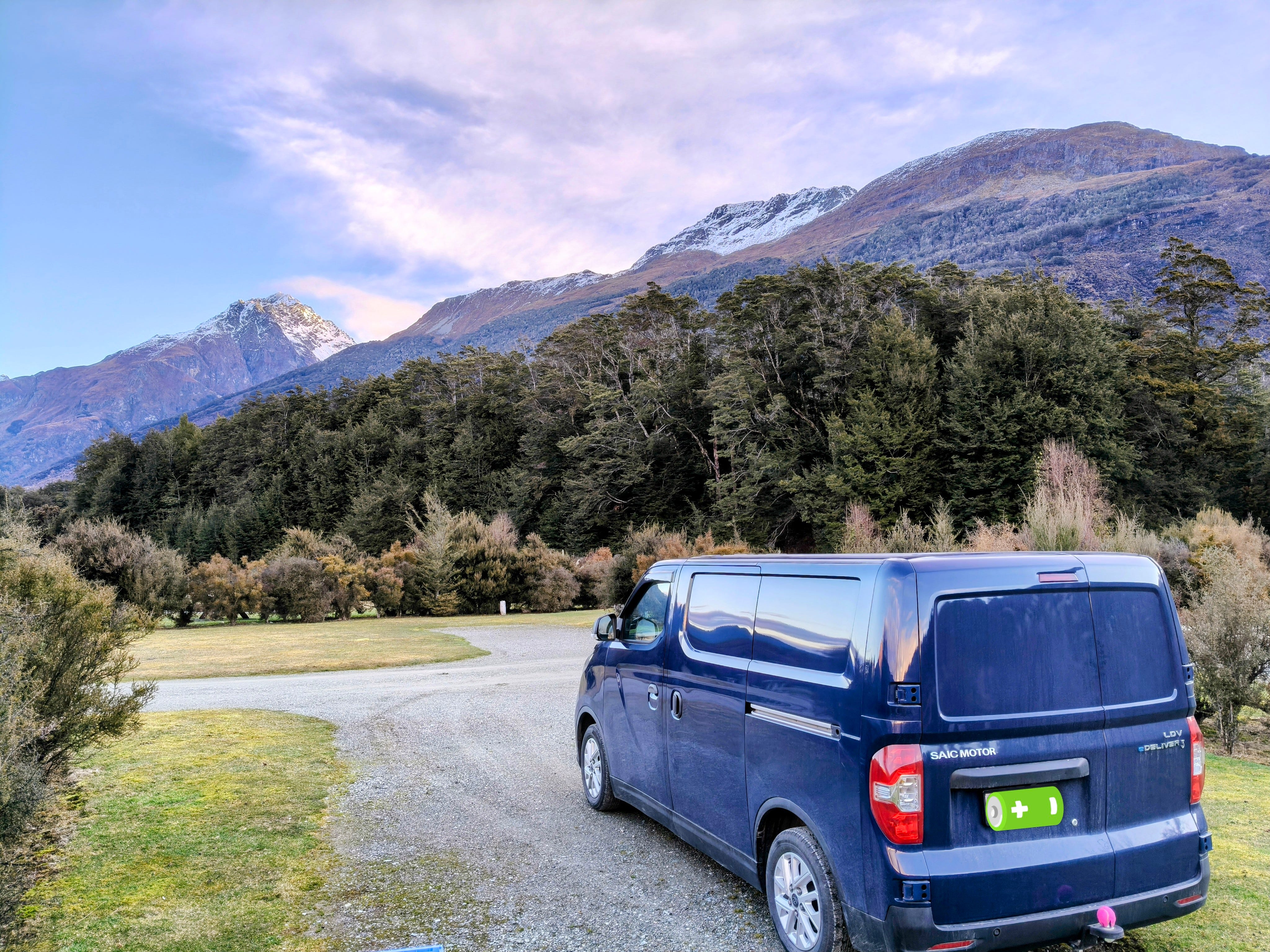
I took myself for a post-hike camp in the E-van this week and something struck me. As I sat amongst the haw-hawing bird life and swaying beech, inside a giant amphitheatre composed of snow-capped mountains, I realised there’s a spectrum of electric campervanning. As I thought a bit more about this, I realised we’d subconsciously gravitated to one end of this spectrum.
You see, when you drive a vehicle that needs electron juice every 200km or so, you’re constantly having to ensure you’re travelling via somewhere you can get that juice. Most of New Zealand now has fast charger coverage and that’s great. However, in a van that only charges at 50kw from a DC fast charger (in human speak, that’s about 45 minutes to get from 10% to 80%), this quickly feels like an uneconomical use of time. Do you know how many kilometres I can walk in 45 minutes? Add to that the fact fast charges of these amounts can set you back $20-$30 a time and you’re soon wondering if there’s a better option.
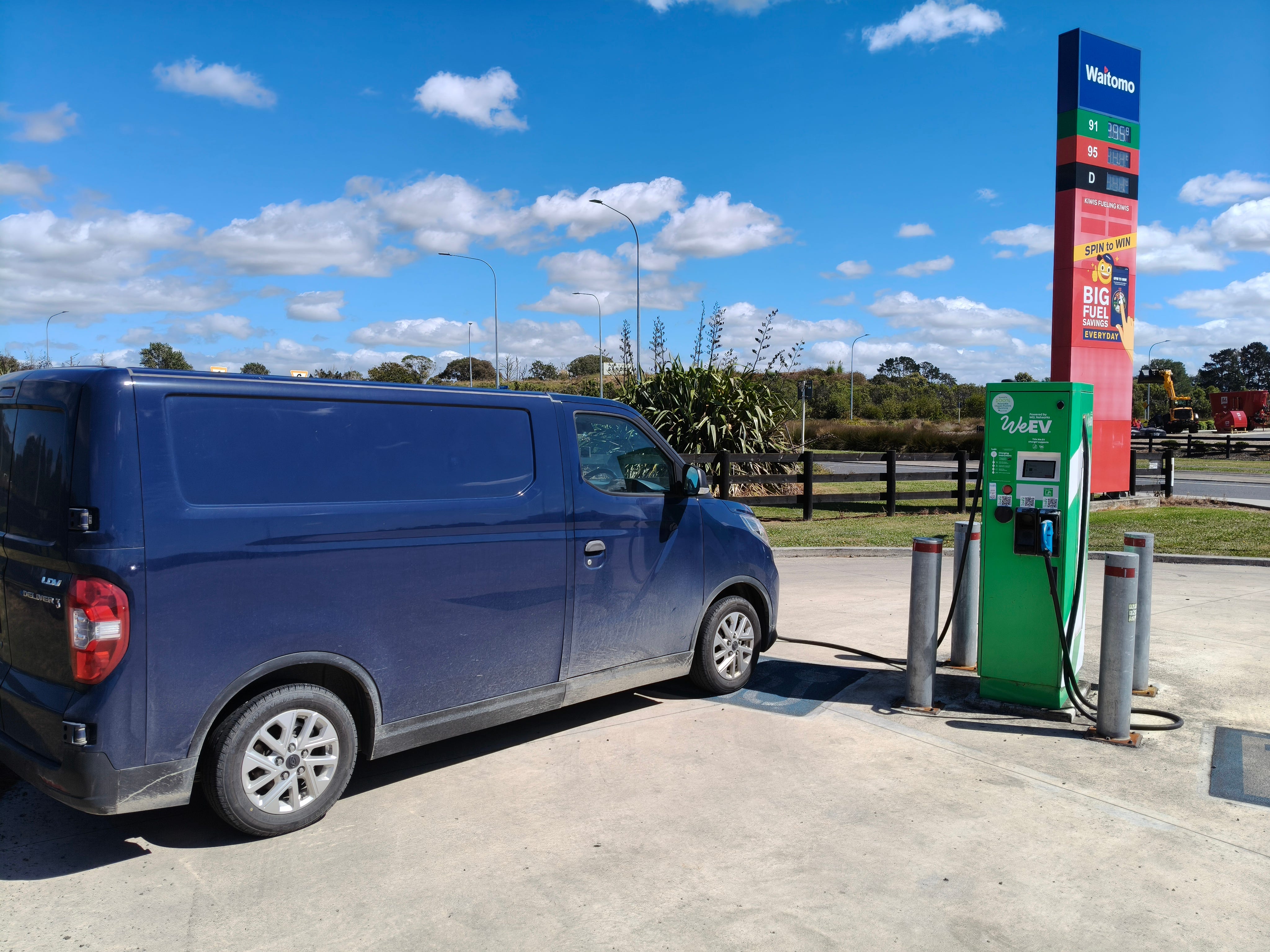
Enter the holiday parks, with their 7kw AC chargers. Or even the ones with just a regular campsite power supply that they don’t mind us using with the portable “granny charger”1. The most efficient use of time is to charge the vehicle overnight and enjoy the days exploring. You pay your nightly camp fees - let’s say $50 - maybe a top-up for charging - call it $10 - then jump in the hot shower and enjoy the nice, warm and sociable kitchen while you make dinner on a proper cooker. The comfort out of season is unrivalled.
If you’re remotely adventurously minded, you’ll see the pitfall here: by opting for the all-in-one package deal, you might be getting your vehicle the fuel it needs, but are you getting yourself the fuel you need?
When I bought the van, I had nothing but adventure in mind. Teamed up with the Department of Conservation camping pass, it was going to unlock a new level of freedom for us. We’d blast up that dead-end gravel road, see the wacky natural rock formations, kip the night at the associated DOC camp, then head back out the next day, regenerated by the sound of a ruru/morepork calling out “more pork” all night.
That’s all completely possible and has happened at times, but it’s surreptitiously become a choice that has to be consciously made. When car camping with a tent was the way we got outdoors, DOC sites were the value option and they left us feeling fed. They were the near-constant choice, only breaking form to visit a special camp or a sterile place with sterile showers. Now, with this new mini-motorhome, we seem to have slid to the other end of the scale. Or spectrum. I began by calling it a spectrum, so let’s continue with that, shall we?


The picturesque, quiet and nature-loaded Sylvan Campsite highlighted this more than anything to me this week. The van’s battery sat on a healthy 57%, more than enough to get to the Chargenet chargers in Glenorchy (expensive) and Queenstown (also expensive), the Z and BP chargers in Frankton (expensive and run by petrochemical companies) and, most likely, all the way home. This meant I just sat there, camping and loving it. The way it’s supposed to be. More of this, please.
Why do grannies always get the short end of the stick? Grannies are great. They bake ginger cakes and chocolate cakes. They give us book tokens and cash on our birthdays. They make jumpers and hats that keep us warm in winter. Yet, whenever something is slow, we equate that thing with ‘being granny’. It’s hardly fair.